Author: testerRid

  • Can Tea Help With Weight Loss

    Can Tea Help With Weight Loss

    Can Tea Help With Weight Loss? What the Evidence Really Says

    Tea is often promoted as a simple way to boost metabolism, burn fat, or make weight loss easier. Green tea gets most of the attention, but black, oolong, and herbal teas are also frequently included in weight-loss advice.

    There is some science behind the interest—but the reality is much less dramatic than many headlines suggest.

    Research indicates that compounds found in green tea, particularly catechins and caffeine, may have a modest effect on body weight. However, the overall evidence is mixed, and any effect appears to be small. A 2024 systematic review of randomized trials found that green tea was associated with a small reduction in body weight compared with some controls, but the researchers rated the certainty of the evidence as low or very low.

    So, can tea help with weight loss? Possibly, but it should not be viewed as a reliable weight-loss treatment or a substitute for established approaches to health.

    Why Green Tea Gets So Much Attention

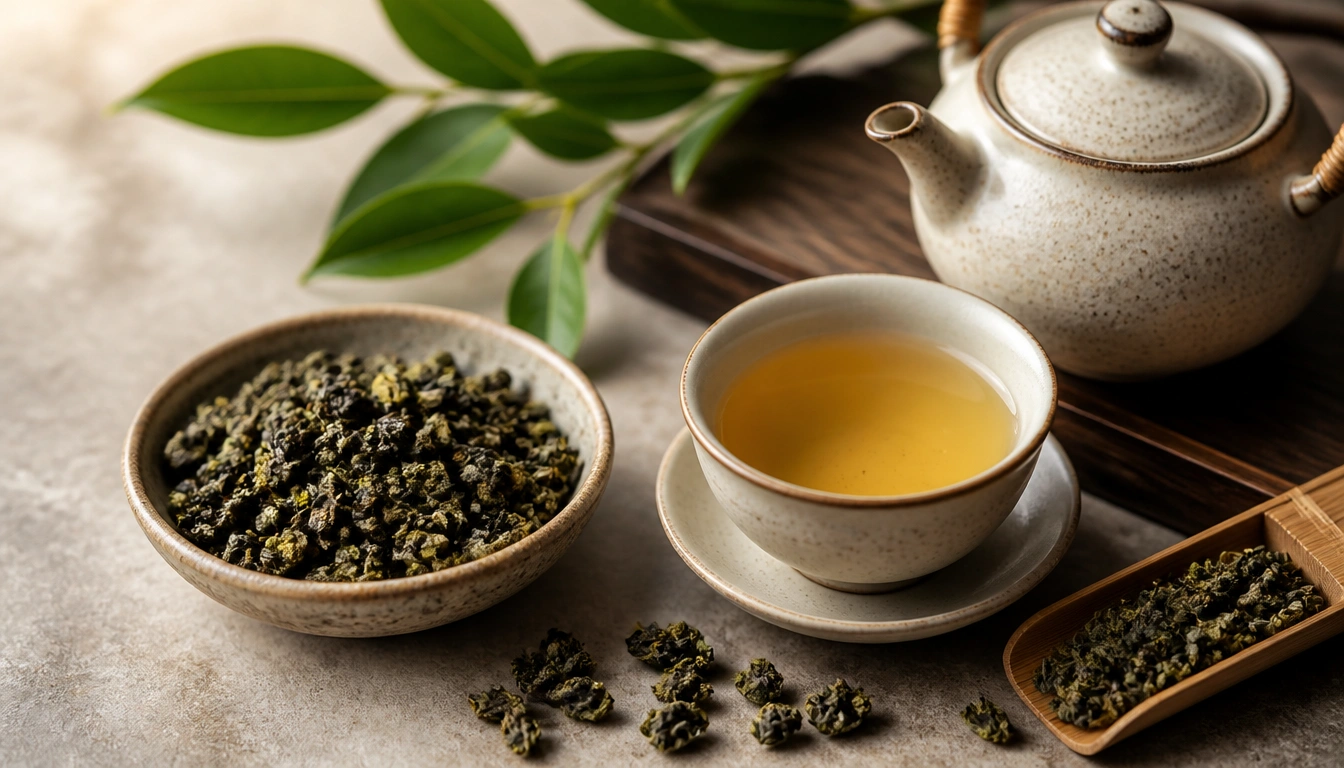
    Green, black, and oolong tea all come from the same plant, Camellia sinensis. What makes them different is how the leaves are processed. Herbal teas, by contrast, are made from other plants and aren’t technically tea in the same sense.

    Green tea contains polyphenols called catechins, along with caffeine. One catechin in particular, epigallocatechin gallate (EGCG), has been extensively studied.

    Researchers have proposed several mechanisms by which catechins and caffeine could influence energy expenditure and fat metabolism. Laboratory and clinical research suggests these compounds can affect some metabolic processes. But an interesting biological mechanism does not automatically translate into meaningful weight loss in everyday life.

    That distinction matters.

    The fact that green tea can influence certain metabolic pathways doesn’t mean drinking it will cause substantial or predictable changes in body weight.

    What Does the Research Actually Show?

    The evidence has changed somewhat depending on the type of study, the tea product used, and the people participating.

    A recent systematic review and network meta-analysis published in 2024 examined 22 randomized controlled trials involving 1,710 adults. The researchers found that green tea was associated with a small reduction in weight compared with placebo or water. However, they also noted substantial limitations: most studies had a high risk of bias, relatively few lasted for longer periods, and the certainty of the evidence was low to very low. Data on teas other than green tea were particularly limited.

    This is an important nuance because older reviews have sometimes reached less encouraging conclusions. The National Center for Complementary and Integrative Health (NCCIH) notes that green tea has not been clearly demonstrated to be effective for weight loss, while also acknowledging that catechins and caffeine may have a modest effect on body weight.

    Taken together, the fairest conclusion is not that tea either “works” or “doesn’t work.”

    Rather, green tea may have a small effect for some people, but the evidence does not support treating it as a powerful weight-loss tool.

    What About Black and Oolong Tea?

    Black and oolong teas contain many of the same broad categories of compounds found in green tea, but their processing differs.

    That doesn’t mean they have been proven to produce the same effects on body weight.

    Much of the research and public discussion around tea and weight management focuses specifically on green tea or green-tea extracts. The 2024 review found insufficient evidence to draw equally strong conclusions about other types of tea.

    So claims that black or oolong tea will specifically “burn fat” or accelerate weight loss should be treated cautiously.

    What About Herbal Tea?

    Herbal teas deserve a separate category because they are made from a wide range of plants rather than Camellia sinensis.

    Some herbal beverages may be pleasant, hydrating, or useful as alternatives to other drinks, but that doesn’t mean they have been demonstrated to cause weight loss.

    Claims that peppermint, rooibos, or other herbal teas automatically suppress appetite or increase fat burning need evidence specific to the particular plant and outcome being claimed.

    In other words, “natural” and “tea” aren’t evidence that a beverage causes weight loss.

    Does Unsweetened Tea Have an Advantage?

    There is one straightforward reason tea can fit into a health-conscious eating pattern: it can be consumed without adding much energy from sugar or other ingredients.

    Replacing a sugar-sweetened beverage with an unsweetened drink can change the overall nutritional picture of someone’s diet. But that is different from saying tea itself has a special fat-burning effect.

    This distinction gets lost surprisingly often.

    If a tea product is loaded with sugar, syrups, cream, or other additions, its nutritional profile is obviously different from that of plain brewed tea.

    The simplest takeaway is to consider the whole beverage, not just the word “tea” on the label.

    Tea Is Not the Same as a Green Tea Supplement

    This is one of the most important distinctions to understand.

    Drinking green tea and taking concentrated green-tea extract are not necessarily equivalent.

    NCCIH reports that green tea consumed as a beverage has not raised the same safety concerns associated with concentrated extracts. Green-tea extract supplements, however, have been associated with side effects including digestive symptoms and increased blood pressure, and rare cases of liver injury have been reported, particularly with extract products. Green tea can also interact with some medicines.

    That makes aggressive marketing around “fat-burning” green-tea supplements especially worth questioning.

    A product that contains a concentrated extract is not simply a stronger version of a normal cup of tea.

    What About “Detox” Teas?

    This is another area where marketing can run ahead of evidence.

    Your body already has organs responsible for processing and eliminating substances it doesn’t need. Drinking an herbal beverage does not automatically “flush toxins” or create a special fat-loss effect.

    NCCIH also warns that some detox approaches involve extreme dietary restriction or large amounts of fluids and herbal products, which can create health risks rather than improve health.

    So when a tea is marketed as a “detox,” “cleanse,” or rapid weight-loss solution, it’s worth asking what evidence actually supports that specific claim.

    Does Timing Your Tea Matter?

    You may encounter advice suggesting that green tea should be consumed before exercise or that black tea should be taken after meals for maximum fat burning.

    The evidence does not justify treating these timing rules as established weight-loss strategies.

    There is a difference between a study observing a particular metabolic effect under controlled conditions and evidence showing that a particular drinking schedule produces meaningful, lasting changes in body weight.

    For someone evaluating tea claims, this is a useful rule: the more precise and dramatic the promise, the more important it is to look for strong human evidence supporting it.

    So, Is Tea Worth Drinking?

    If you enjoy tea, there is little reason to treat it as something you must avoid simply because its weight-loss effects are uncertain.

    Tea can be an enjoyable beverage, and research into tea has explored several aspects of health beyond body weight. But the evidence does not support turning tea into a weight-loss strategy in its own right.

    The more sensible approach is to think of tea as one small part of an overall eating and lifestyle pattern, rather than a shortcut.

    And if you’re considering concentrated tea extracts or supplements, that’s a different decision. The potential risks, interactions, and uncertain benefits make it important to be much more cautious than you would be with an ordinary cup of brewed tea.

    The Bottom Line

    So, can tea aid in weight loss?

    Possibly—but the effect appears to be modest, inconsistent, and far less impressive than many marketing claims suggest.

    Green tea has the strongest evidence of the commonly discussed teas, but even there, recent research describes only a small potential effect and has important limitations. Evidence for black, oolong, and herbal teas as weight-loss aids is much less convincing.

    The best way to evaluate a tea claim is to look beyond the headline:

    • Is the research in humans?
    • Was it a randomized controlled trial?
    • Was the study long enough to matter?
    • Was the product ordinary tea or a concentrated extract?
    • Was the reported effect large enough to be meaningful?
    • Has the finding been replicated?
    • Are there safety concerns?

    Those questions won’t make for the most sensational tea advertisement—but they can help you make a much more educated decision.

    Tea can be part of a healthy lifestyle. It just shouldn’t have to pretend to be a miracle cure to earn a place in your cup.
  • Red Tea Benefits

    Red Tea Benefits

    Red Tea Benefits: Caffeine, Health Effects, and What to Know

    If you’re searching for the benefits of red tea, there’s an important question to answer first: What exactly is “red tea”?

    The name can refer to two quite different beverages.

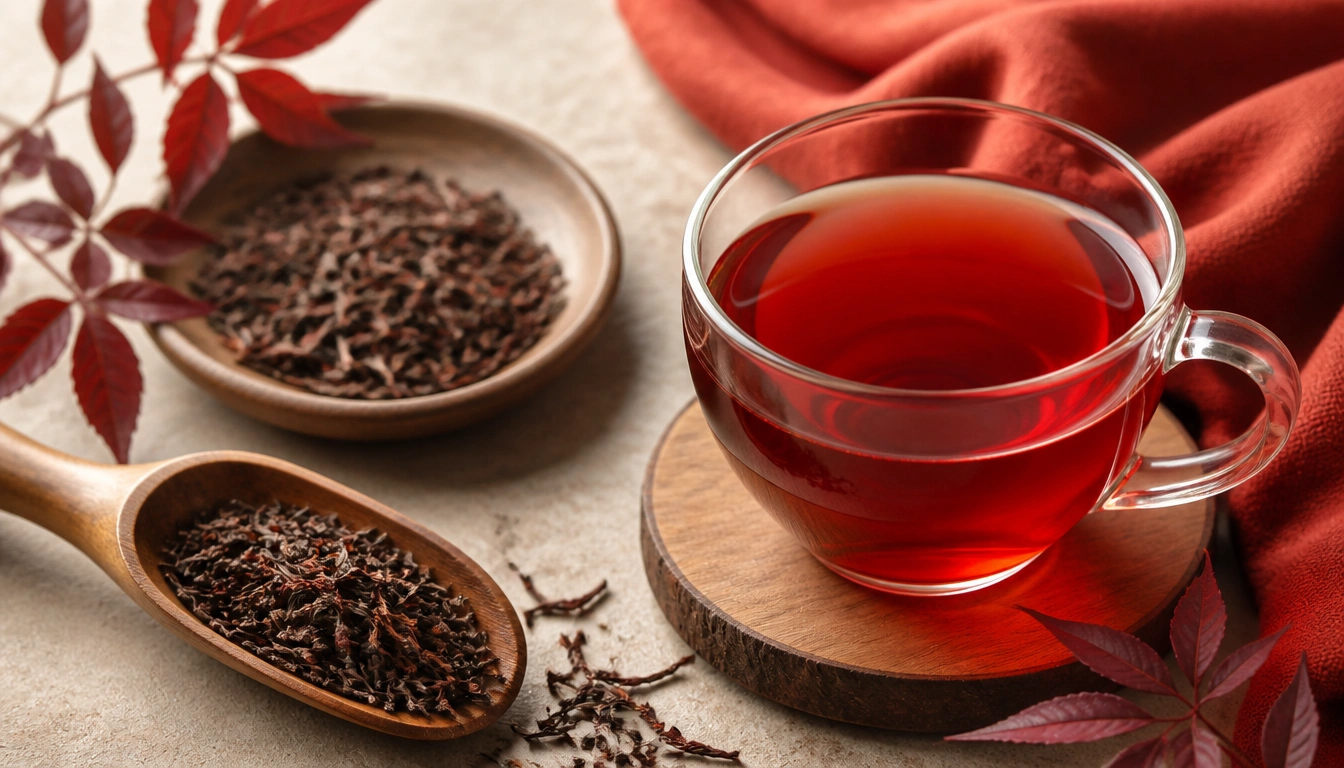
    In Chinese tea terminology, hong cha, or “red tea,” is what English speakers generally call black tea. It comes from the Camellia sinensis plant and is fully oxidized during processing.

    In other contexts, particularly in health and wellness products, “red tea” can mean rooibos, also known as red bush tea. Rooibos is a South African herbal infusion made from Aspalathus linearis, not from the traditional tea plant, and it is naturally caffeine-free.

    That distinction matters because the potential benefits, caffeine content, and evidence behind the two drinks are different.

    This guide focuses primarily on the black-tea meaning of red tea, while explaining where rooibos fits into the picture.

    What Is Red Tea?

    If you encountered the term “red tea” in connection with Chinese tea, it usually means black tea.

    All traditional teas—including black, green, white, and oolong tea—come from Camellia sinensis. What makes them different is how the leaves are processed. Black tea undergoes extensive oxidation, producing its characteristic dark leaves and reddish-brown to dark-colored brewed liquor.

    The Chinese name hong cha literally refers to the reddish color of the brewed tea. In English-speaking countries, the same type of tea became known as “black tea,” referring more to the appearance of the processed leaves.

    Examples include:

    • English Breakfast
    • Earl Grey
    • Ceylon
    • Keemun
    • Assam
    • Lapsang Souchong

    So if a product or article calls black tea “red tea,” it may simply be using the Chinese terminology.

    Red tea isn’t always black tea

    There is another common source of confusion: rooibos.

    Rooibos is a South African herbal tea made from Aspalathus linearis. Red rooibos is produced through oxidation/fermentation that gives the finished beverage its characteristic reddish color. Unlike black tea, rooibos is naturally caffeine-free.

    If you’re looking for “red tea benefits,” check the label or product description to determine whether you’re buying Camellia sinensis black tea or rooibos.

    Potential Benefits of Red Tea

    When “red tea” means black tea, its potential benefits are mainly associated with its naturally occurring polyphenols and other compounds.

    However, it is important to distinguish between potential health effects observed in research and claims that a cup of tea can prevent or treat disease.

    Tea can be part of a healthy diet, but it shouldn’t be viewed as a substitute for medical care, a balanced diet, physical activity, or treatment prescribed by a healthcare professional.

    1. It Provides Polyphenols

    Black tea contains polyphenols, naturally occurring plant compounds that have attracted considerable scientific interest. Tea also contains caffeine and other compounds, including amino acids and various minerals and trace elements.

    Polyphenols can show antioxidant activity in laboratory research. That is one reason tea has been studied in relation to cardiovascular health and other aspects of health.

    But there’s an important distinction: showing antioxidant activity in a laboratory isn’t the same as proving that drinking tea prevents a particular disease in humans.

    That distinction is worth keeping in mind when evaluating dramatic “antioxidant” claims about tea.

    2. It Can Provide Caffeine

    Unlike rooibos, traditional black tea naturally contains caffeine.

    The amount varies considerably depending on the tea, serving size, brewing method, and other factors. As a general reference, an 8-ounce cup of black or green tea contains roughly 30–50 mg of caffeine, although individual servings can fall outside that range.

    Caffeine is one reason tea can feel stimulating and may help with alertness.

    It’s also why caffeine-sensitive people may prefer to drink black tea earlier in the day or choose a decaffeinated or caffeine-free alternative.

    3. It May Support Cardiovascular Health

    Cardiovascular health is one of the most studied areas of black-tea research.

    Some clinical studies and meta-analyses have found small reductions in blood pressure associated with regular black-tea consumption. For example, one meta-analysis of randomized controlled trials found modest reductions in systolic and diastolic blood pressure.

    However, the overall evidence isn’t perfectly consistent. Another systematic review and meta-analysis found no significant short-term effects of green or black tea on blood pressure or several blood-lipid measures, while noting that the available trials were limited in size and statistical power.

    That means the most accurate takeaway is not that red tea “lowers blood pressure,” but that research suggests a possible modest cardiovascular benefit that remains an area of scientific study.

    4. It May Be Associated With Heart Benefits Over the Long Term

    Observational research has also investigated whether people who regularly drink black tea have different cardiovascular outcomes from people who drink little or none.

    A 2026 systematic review and meta-analysis of cohort studies reported an association between higher black-tea consumption and lower coronary heart disease risk. However, observational studies can identify associations without proving that tea itself caused the difference.

    This is an important distinction when reading health headlines.

    A food or beverage can be associated with better health outcomes without being a standalone cause of those outcomes.

    What About Red Rooibos?

    If by red tea you mean red rooibos, the situation is different.

    Rooibos doesn’t come from Camellia sinensis. It is a herbal infusion made from Aspalathus linearis and is naturally caffeine-free. It also contains its own distinctive collection of polyphenolic compounds, including aspalathin and nothofagin.

    Human research on rooibos is growing, but the evidence base is much smaller than the extensive literature on traditional tea.

    A scoping review of human rooibos research found studies examining a variety of health outcomes, but the studies differed considerably in their preparations, amounts, populations, and outcomes. That makes it difficult to draw broad conclusions about specific health benefits.

    So while rooibos can be a useful caffeine-free beverage choice, it’s better to avoid turning its antioxidant content into a promise of specific medical benefits.

    How Much Caffeine Is in Red Tea?

    If your “red tea” is actually black tea, it contains caffeine.

    A typical 8-ounce serving of black tea contains approximately 30–50 mg of caffeine, although the actual amount can vary.

    Several factors can affect the amount you consume, including:

    • Tea variety
    • Amount of tea leaves used
    • Serving size
    • Brewing time
    • Water temperature
    • Whether the product is decaffeinated

    If you’re particularly sensitive to caffeine, the number on a general caffeine chart shouldn’t be treated as an exact prediction for your individual cup.

    If your red tea is rooibos, however, it is naturally caffeine-free.

    Possible Considerations Before Drinking Red Tea

    For most people, tea can fit comfortably into a varied diet. Still, a few considerations are worth knowing.

    Caffeine sensitivity

    Because traditional black tea contains caffeine, it can be unsuitable for people who are particularly sensitive to caffeine or who are trying to limit their intake.

    If caffeine affects your sleep, you may want to avoid caffeinated tea close to bedtime.

    Added sugar

    The health profile of a tea beverage can change depending on what you add to it.

    A plain cup of black tea is very different nutritionally from a heavily sweetened bottled tea or café drink. If you’re drinking tea for its place in a healthy eating pattern, consider how much added sugar your overall beverage contains.

    Don’t confuse food with medicine

    Research into tea and health is interesting, but it doesn’t mean tea can diagnose, prevent, or treat medical conditions.

    If you have high blood pressure, high cholesterol, or another health condition, tea should be considered part of your overall lifestyle rather than a replacement for appropriate medical advice or treatment.

    How to Brew Red or Black Tea

    Once you’ve identified what kind of “red tea” you’re buying, preparation is fairly simple.

    For loose-leaf black tea, a practical starting point is:

    1. Heat fresh water.
    2. Place the tea leaves in an infuser or teapot.
    3. Pour the hot water over the leaves.
    4. Steep for several minutes, adjusting the time according to the tea and your preferred strength.
    5. Strain and serve.

    If the tea tastes too bitter or astringent, try shortening the steeping time rather than automatically adding more sweetener.

    You can drink black tea plain or add milk, lemon, or another preferred ingredient.

    For rooibos, preparation can be similar, although rooibos is often brewed somewhat more robustly because it does not develop the same bitterness as black tea.

    Frequently Asked Questions

    Is red tea the same as black tea?

    Sometimes. In Chinese terminology, “red tea” (hong cha) generally refers to what English speakers call black tea. However, “red tea” is also commonly used for rooibos, which is a completely different, caffeine-free herbal infusion.

    Does red tea contain caffeine?

    If you’re referring to black tea, yes. An 8-ounce serving commonly contains around 30–50 mg of caffeine, although the amount varies.

    If you’re referring to rooibos, it is naturally caffeine-free.

    Is red tea good for you?

    Black tea contains polyphenols and has been studied for possible cardiovascular effects. Some research suggests modest benefits for certain cardiovascular risk factors, but the evidence is mixed and shouldn’t be interpreted as proof that tea prevents or treats disease.

    Is rooibos healthier than black tea?

    There isn’t a simple answer. They are different beverages with different compositions and caffeine levels. Rooibos is naturally caffeine-free, while black tea contains caffeine. Research into both beverages continues, and neither should be treated as a cure-all.

    Can you drink red tea every day?

    For many people, tea can be part of a normal varied diet. The appropriate amount depends on the individual and, for caffeinated black tea, overall caffeine intake. If you have concerns about caffeine, medications, or a medical condition, a healthcare professional can provide advice specific to you.

    The Bottom Line

    “Red tea” isn’t as straightforward a term as it sounds.

    If you’re talking about Chinese hong cha, you’re generally talking about black tea from Camellia sinensis. It contains polyphenols and caffeine, and research suggests it may have modest cardiovascular effects, although the evidence is not strong enough to turn those findings into sweeping health claims.

    If you’re talking about red rooibos, you’re talking about a caffeine-free South African herbal infusion with a different chemical composition and a smaller human research base.

    For someone searching for the benefits of red tea, the most useful takeaway is therefore simple: identify which “red tea” you’re drinking, understand its caffeine content, and view its potential health benefits in the context of the broader evidence rather than as guaranteed medical effects.

  • Rent to Own Pros vs Cons and Alternatives

    Rent to Own Pros vs Cons and Alternatives

    Your instincts are spot on. In Ontario, rent-to-own agreements are overwhelmingly a bad idea, particularly for someone who is already in a difficult financial position. [1]

    While marketed as a lifeline or a “bridge to homeownership” for people with low down payments or bruised credit, the reality is that rent-to-own contracts are fundamentally designed to protect the seller, not the buyer. For someone struggling financially, entering one of these contracts is highly likely to result in losing thousands of dollars and walking away with nothing. [2, 3, 4]

    A direct breakdown explains why these agreements are so risky and how they typically collapse:

    ⚠️ The Reality of How Rent-to-Own Works in Ontario

    When a buyer enters a rent-to-own contract, they sign two agreements: a standard lease and an option to purchase. [5, 6]

    1. The Upfront “Option Fee”: The buyer must pay an upfront deposit (usually 2% to 5% of the home’s purchase price) just for the right to buy the home in 3 to 5 years. This fee is strictly non-refundable. [3, 6]
    2. Above-Market Monthly Rent: The monthly payment is deliberately inflated. A portion pays the actual rent, while the extra premium is held as a “rent credit” that builds toward a future down payment. [2, 3, 6]
    3. The Trap at the End of the Term: When the 3-to-5-year term ends, the buyer must qualify for a traditional bank mortgage to buy out the rest of the home. [7, 8]

    🛑 Why It Is a Financial Trap for Someone in a Bad Place

    If your acquaintance is already struggling financially, the odds are heavily stacked against them succeeding, due to three major structural flaws:

    •  
    • The “One Strike and You’re Out” Clause: Many private rent-to-own contracts in Ontario contain brutal clauses stating that if a tenant is late on a single rent payment, the entire agreement is voided. The landlord can evict them, and the tenant forfeits 100% of their upfront option fee and all the extra rent credits they accumulated. [3, 7]
    • The Bank Will Still Say No: Your acquaintance might assume that paying rent-to-own for 3 years magically guarantees a mortgage. It does not. At the deadline, a traditional bank (like TD, RBC, or Scotiabank) will audit their income, debt-to-income ratio, and credit score. If their financial situation hasn’t drastically improved, the bank will deny the mortgage, the contract expires, and the landlord keeps all their saved money. [2, 3, 7, 8]
    • The Maintenance Bait-and-Switch: Legally, under the Ontario Residential Tenancies Act, landlords are responsible for major property repairs. However, rent-to-own contracts frequently try to illegally shift maintenance costs (like a broken furnace or roof leak) onto the renter. For someone already struggling, an unexpected $5,000 roof repair can completely break them financially. [3, 9]
    •  

    📋 Direct Comparison: Rent-to-Own vs. Traditional Saving

    FeatureRent-to-OwnRenting Normally + Saving
    Monthly CostVery High (Base rent + forced down-payment premium).Standard (Market rent only).
    Financial FlexibilityZero. Skipping a payment or needing to move means losing everything.High. If an emergency happens, savings can be paused or accessed.
    Risk of Asset LossExtreme. If you fail to get a mortgage at the end, you walk away with $0.None. Savings stay secure in your own bank account.
    Home Value RiskHigh. If the home’s value drops below the locked-in price, banks won’t lend the full amount, forcing you to walk away.None. You choose when to buy based on current market conditions.

     How to Talk to Your Acquaintance

    People often cling to rent-to-own out of desperation because they feel traditional homeownership is slipping away in Ontario’s expensive market. If you want to gently push back on their insistence, ask them these critical, practical questions: [10]

    1. “If a major Canadian bank won’t trust you with a mortgage right now, why do you think a private company or landlord is offering you an easier shortcut? (The answer is: because they profit immensely if you fail and they get to keep your deposit).”
    2. “What happens to your upfront deposit and extra monthly credits if you lose your job or miss a payment next year?”
    3. “Have you had a real estate lawyer review the contract to see what happens if the landlord defaults on their own mortgage or goes bankrupt?” [3, 7, 8]

    The safest financial path for them is to rent a cheaper place, focus heavily on credit repair, and build a down payment in a secure, high-interest account (like a First Home Savings Account – FHSA) where they control the money—not a landlord. [3]

    Would you like some specific examples of common rent-to-own contract red flags they should watch out for, or info on legitimate Ontario housing programs for credit-building?

    [1] https://www.intact.ca

    [2] https://thecanadianhome.com

    [3] https://www.youtube.com

    [4] https://www.reddit.com

    [5] https://storeys.com

    [6] https://thecanadianhome.com

    [7] https://www.ratehub.ca

    [8] https://ownright.com

    [9] https://www.youtube.com

    [10] https://www.cpacanada.ca

    🚩 Red Flags in Ontario Rent-to-Own Contracts

    Private rent-to-own operators frequently bury traps in the fine print. If your acquaintance is looking at a contract, they need to run if they spot any of the following:

    • The “Cross-Default” or “One-Late-Payment” Clause: This is the most dangerous clause. It states that if a tenant is even a day late on rent, or violates any minor rule in the lease, the option-to-purchase contract is immediately cancelled. The landlord keeps the entire down payment.
    • Shifting Maintenance and Repair Costs: The contract states the buyer is responsible for fixing the roof, furnace, or plumbing. In Ontario, the Residential Tenancies Act explicitly states that landlords are legally responsible for all maintenance, even in a rent-to-own agreement. Forcing the tenant to pay for repairs is a major red flag.
    • Inflated/Unrealistic Future Purchase Price: The contract will lock in a price for the home 3 or 5 years from now based on an assumed growth rate (e.g., compounding at 5% per year). If the real estate market slows down or drops, the house will be worth less than the contract price. Banks will refuse to give a mortgage for a house that is over-valued, causing the buyer to default.
    • The Seller Has a High-Ratio or Risky Mortgage: If the current owner/landlord falls behind on their own mortgage payments or goes into foreclosure, the bank can seize the house. The rent-to-own tenant will be evicted, and their saved down payment will disappear with the bankrupt landlord.
    • Pressuring Against Independent Legal Advice: If the company insists on using “their” lawyer or rushes your acquaintance to sign quickly without getting an independent real estate lawyer to review the paperwork, it is almost certainly a predatory setup.

    🟢 Legitimate Housing & Down Payment Programs in Ontario

    Instead of risking their savings with a private landlord, your acquaintance should look into these official, government-backed, and regulated programs designed to help people with lower incomes or credit issues:

    1. Regional Affordable Homeownership Assistance Programs

    Most municipalities and regions in Ontario (such as Toronto, Peel, York, Durham, Waterloo, etc.) run Down Payment Assistance Programs funded by the provincial and federal governments.

    • How it works: The region provides a forgivable loan (usually 5% to 10% of the home purchase price) to use as a down payment.
    • The benefit: It is interest-free. If the buyer stays in the home for a set period (usually 20 years), the loan is completely forgiven and they never have to pay it back. If they sell earlier, they just pay back the principal percentage.
    • How to apply: They must search for the “Affordable Homeownership Program” specifically on their local regional municipality’s official website.

    2. Options for Homes (and similar Non-Profit Developers)

    Options for Homes is Canada’s largest non-profit sustainable condo developer, operating primarily in the Greater Toronto Area.

    • How it works: They build high-quality, cost-effective condos and provide buyers with an “Options Down Payment Loan” equal to 10% to 15% of the condo’s value.
    • The benefit: This loan requires no monthly payments and triggers no interest while they live there. It is only repaid (plus a percentage of the home’s appreciation) when the owner eventually sells the home or moves out.

    3. Habitat for Humanity Ontario Gateway / Regional Chapters

    For families or individuals in severe financial distress who still want to own, Habitat for Humanity offers a completely legitimate alternative to rent-to-own.

    • How it works: They build homes and sell them to selected lower-income families who qualify based on need and a willingness to volunteer (“sweat equity”) with the organization.
    • The benefit: The mortgages are geared directly to the buyer’s income, meaning monthly payments are capped at a financially safe level (usually 30% of gross income), and there is no down payment required.

    4. The First Home Savings Account (FHSA)

    If they need to build their down payment safely without a landlord touching it, they should open an FHSA at a traditional Canadian bank.

    • How it works: They can contribute up to $8,000 per year (up to a $40,000 lifetime limit).
    • The benefit: It combines the best of a RRSP and a TFSA. The money they put in gives them a tax refund (lowering their tax bill), and the money grows 100% tax-free as long as it is eventually used to buy a home. If they change their mind, the money isn’t lost—it can be rolled into an RRSP.

    💡 Summary Advice

    If your acquaintance insists on looking at a rent-to-own option, the ultimate test is to tell them: “Take the contract to an independent real estate lawyer before you give them a single dollar.” A reputable lawyer will easily point out the predatory clauses and likely save them from a massive financial mistake.

    Would you like to look up the specific down payment program available in your acquaintance’s exact Ontario city or region, or see how the credit union alternative works for rebuilding credit?