Red Tea Benefits
Red Tea Benefits: Caffeine, Health Effects, and What to Know
If you’re searching for the benefits of red tea, there’s an important question to answer first: What exactly is “red tea”?
The name can refer to two quite different beverages.
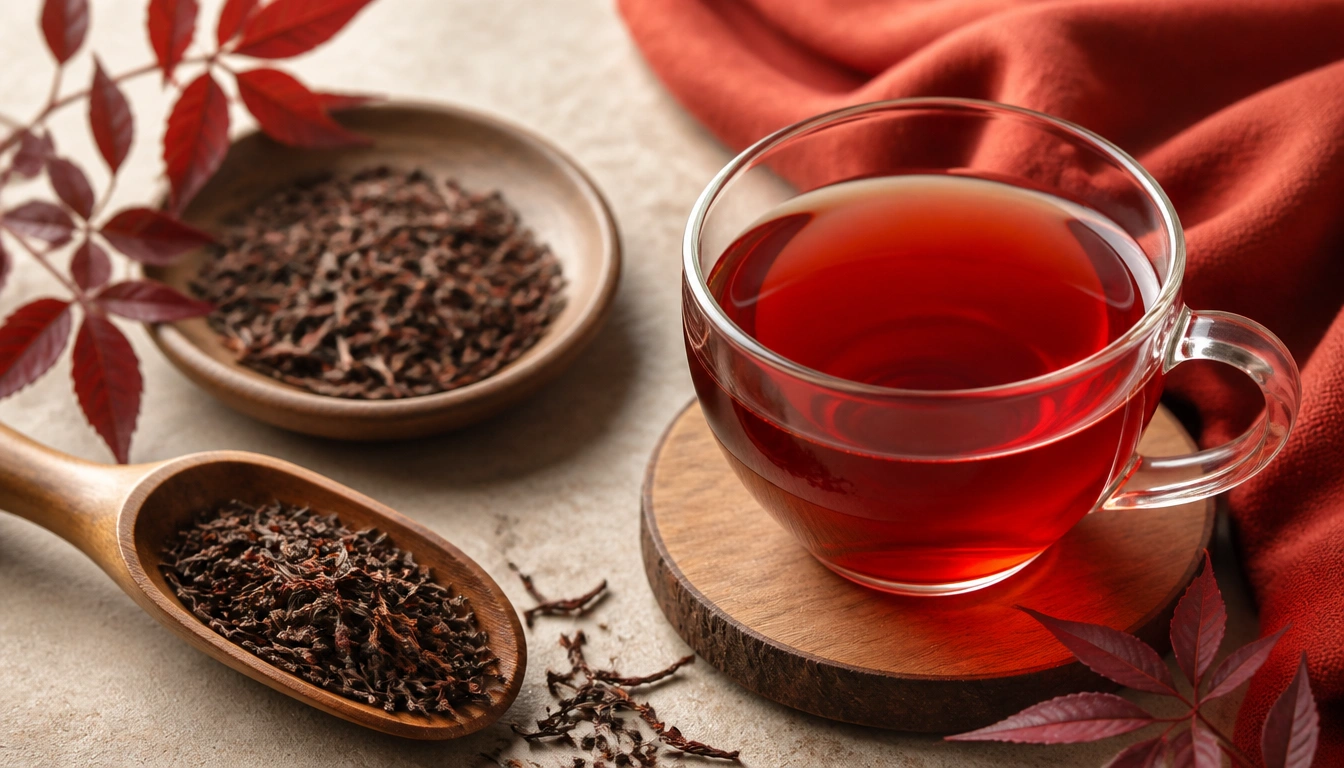
In Chinese tea terminology, hong cha, or “red tea,” is what English speakers generally call black tea. It comes from the Camellia sinensis plant and is fully oxidized during processing.
In other contexts, particularly in health and wellness products, “red tea” can mean rooibos, also known as red bush tea. Rooibos is a South African herbal infusion made from Aspalathus linearis, not from the traditional tea plant, and it is naturally caffeine-free.
That distinction matters because the potential benefits, caffeine content, and evidence behind the two drinks are different.
This guide focuses primarily on the black-tea meaning of red tea, while explaining where rooibos fits into the picture.
What Is Red Tea?
If you encountered the term “red tea” in connection with Chinese tea, it usually means black tea.
All traditional teas—including black, green, white, and oolong tea—come from Camellia sinensis. What makes them different is how the leaves are processed. Black tea undergoes extensive oxidation, producing its characteristic dark leaves and reddish-brown to dark-colored brewed liquor.
The Chinese name hong cha literally refers to the reddish color of the brewed tea. In English-speaking countries, the same type of tea became known as “black tea,” referring more to the appearance of the processed leaves.
Examples include:
- English Breakfast
- Earl Grey
- Ceylon
- Keemun
- Assam
- Lapsang Souchong
So if a product or article calls black tea “red tea,” it may simply be using the Chinese terminology.
Red tea isn’t always black tea
There is another common source of confusion: rooibos.
Rooibos is a South African herbal tea made from Aspalathus linearis. Red rooibos is produced through oxidation/fermentation that gives the finished beverage its characteristic reddish color. Unlike black tea, rooibos is naturally caffeine-free.
If you’re looking for “red tea benefits,” check the label or product description to determine whether you’re buying Camellia sinensis black tea or rooibos.
Potential Benefits of Red Tea
When “red tea” means black tea, its potential benefits are mainly associated with its naturally occurring polyphenols and other compounds.
However, it is important to distinguish between potential health effects observed in research and claims that a cup of tea can prevent or treat disease.
Tea can be part of a healthy diet, but it shouldn’t be viewed as a substitute for medical care, a balanced diet, physical activity, or treatment prescribed by a healthcare professional.
1. It Provides Polyphenols
Black tea contains polyphenols, naturally occurring plant compounds that have attracted considerable scientific interest. Tea also contains caffeine and other compounds, including amino acids and various minerals and trace elements.
Polyphenols can show antioxidant activity in laboratory research. That is one reason tea has been studied in relation to cardiovascular health and other aspects of health.
But there’s an important distinction: showing antioxidant activity in a laboratory isn’t the same as proving that drinking tea prevents a particular disease in humans.
That distinction is worth keeping in mind when evaluating dramatic “antioxidant” claims about tea.
2. It Can Provide Caffeine
Unlike rooibos, traditional black tea naturally contains caffeine.
The amount varies considerably depending on the tea, serving size, brewing method, and other factors. As a general reference, an 8-ounce cup of black or green tea contains roughly 30–50 mg of caffeine, although individual servings can fall outside that range.
Caffeine is one reason tea can feel stimulating and may help with alertness.
It’s also why caffeine-sensitive people may prefer to drink black tea earlier in the day or choose a decaffeinated or caffeine-free alternative.
3. It May Support Cardiovascular Health
Cardiovascular health is one of the most studied areas of black-tea research.
Some clinical studies and meta-analyses have found small reductions in blood pressure associated with regular black-tea consumption. For example, one meta-analysis of randomized controlled trials found modest reductions in systolic and diastolic blood pressure.
However, the overall evidence isn’t perfectly consistent. Another systematic review and meta-analysis found no significant short-term effects of green or black tea on blood pressure or several blood-lipid measures, while noting that the available trials were limited in size and statistical power.
That means the most accurate takeaway is not that red tea “lowers blood pressure,” but that research suggests a possible modest cardiovascular benefit that remains an area of scientific study.
4. It May Be Associated With Heart Benefits Over the Long Term
Observational research has also investigated whether people who regularly drink black tea have different cardiovascular outcomes from people who drink little or none.
A 2026 systematic review and meta-analysis of cohort studies reported an association between higher black-tea consumption and lower coronary heart disease risk. However, observational studies can identify associations without proving that tea itself caused the difference.
This is an important distinction when reading health headlines.
A food or beverage can be associated with better health outcomes without being a standalone cause of those outcomes.
What About Red Rooibos?
If by red tea you mean red rooibos, the situation is different.
Rooibos doesn’t come from Camellia sinensis. It is a herbal infusion made from Aspalathus linearis and is naturally caffeine-free. It also contains its own distinctive collection of polyphenolic compounds, including aspalathin and nothofagin.
Human research on rooibos is growing, but the evidence base is much smaller than the extensive literature on traditional tea.
A scoping review of human rooibos research found studies examining a variety of health outcomes, but the studies differed considerably in their preparations, amounts, populations, and outcomes. That makes it difficult to draw broad conclusions about specific health benefits.
So while rooibos can be a useful caffeine-free beverage choice, it’s better to avoid turning its antioxidant content into a promise of specific medical benefits.
How Much Caffeine Is in Red Tea?
If your “red tea” is actually black tea, it contains caffeine.
A typical 8-ounce serving of black tea contains approximately 30–50 mg of caffeine, although the actual amount can vary.
Several factors can affect the amount you consume, including:
- Tea variety
- Amount of tea leaves used
- Serving size
- Brewing time
- Water temperature
- Whether the product is decaffeinated
If you’re particularly sensitive to caffeine, the number on a general caffeine chart shouldn’t be treated as an exact prediction for your individual cup.
If your red tea is rooibos, however, it is naturally caffeine-free.
Possible Considerations Before Drinking Red Tea
For most people, tea can fit comfortably into a varied diet. Still, a few considerations are worth knowing.
Caffeine sensitivity
Because traditional black tea contains caffeine, it can be unsuitable for people who are particularly sensitive to caffeine or who are trying to limit their intake.
If caffeine affects your sleep, you may want to avoid caffeinated tea close to bedtime.
Added sugar
The health profile of a tea beverage can change depending on what you add to it.
A plain cup of black tea is very different nutritionally from a heavily sweetened bottled tea or café drink. If you’re drinking tea for its place in a healthy eating pattern, consider how much added sugar your overall beverage contains.
Don’t confuse food with medicine
Research into tea and health is interesting, but it doesn’t mean tea can diagnose, prevent, or treat medical conditions.
If you have high blood pressure, high cholesterol, or another health condition, tea should be considered part of your overall lifestyle rather than a replacement for appropriate medical advice or treatment.
How to Brew Red or Black Tea
Once you’ve identified what kind of “red tea” you’re buying, preparation is fairly simple.
For loose-leaf black tea, a practical starting point is:
- Heat fresh water.
- Place the tea leaves in an infuser or teapot.
- Pour the hot water over the leaves.
- Steep for several minutes, adjusting the time according to the tea and your preferred strength.
- Strain and serve.
If the tea tastes too bitter or astringent, try shortening the steeping time rather than automatically adding more sweetener.
You can drink black tea plain or add milk, lemon, or another preferred ingredient.
For rooibos, preparation can be similar, although rooibos is often brewed somewhat more robustly because it does not develop the same bitterness as black tea.
Frequently Asked Questions
Is red tea the same as black tea?
Sometimes. In Chinese terminology, “red tea” (hong cha) generally refers to what English speakers call black tea. However, “red tea” is also commonly used for rooibos, which is a completely different, caffeine-free herbal infusion.
Does red tea contain caffeine?
If you’re referring to black tea, yes. An 8-ounce serving commonly contains around 30–50 mg of caffeine, although the amount varies.
If you’re referring to rooibos, it is naturally caffeine-free.
Is red tea good for you?
Black tea contains polyphenols and has been studied for possible cardiovascular effects. Some research suggests modest benefits for certain cardiovascular risk factors, but the evidence is mixed and shouldn’t be interpreted as proof that tea prevents or treats disease.
Is rooibos healthier than black tea?
There isn’t a simple answer. They are different beverages with different compositions and caffeine levels. Rooibos is naturally caffeine-free, while black tea contains caffeine. Research into both beverages continues, and neither should be treated as a cure-all.
Can you drink red tea every day?
For many people, tea can be part of a normal varied diet. The appropriate amount depends on the individual and, for caffeinated black tea, overall caffeine intake. If you have concerns about caffeine, medications, or a medical condition, a healthcare professional can provide advice specific to you.
The Bottom Line
“Red tea” isn’t as straightforward a term as it sounds.
If you’re talking about Chinese hong cha, you’re generally talking about black tea from Camellia sinensis. It contains polyphenols and caffeine, and research suggests it may have modest cardiovascular effects, although the evidence is not strong enough to turn those findings into sweeping health claims.
If you’re talking about red rooibos, you’re talking about a caffeine-free South African herbal infusion with a different chemical composition and a smaller human research base.
For someone searching for the benefits of red tea, the most useful takeaway is therefore simple: identify which “red tea” you’re drinking, understand its caffeine content, and view its potential health benefits in the context of the broader evidence rather than as guaranteed medical effects.